
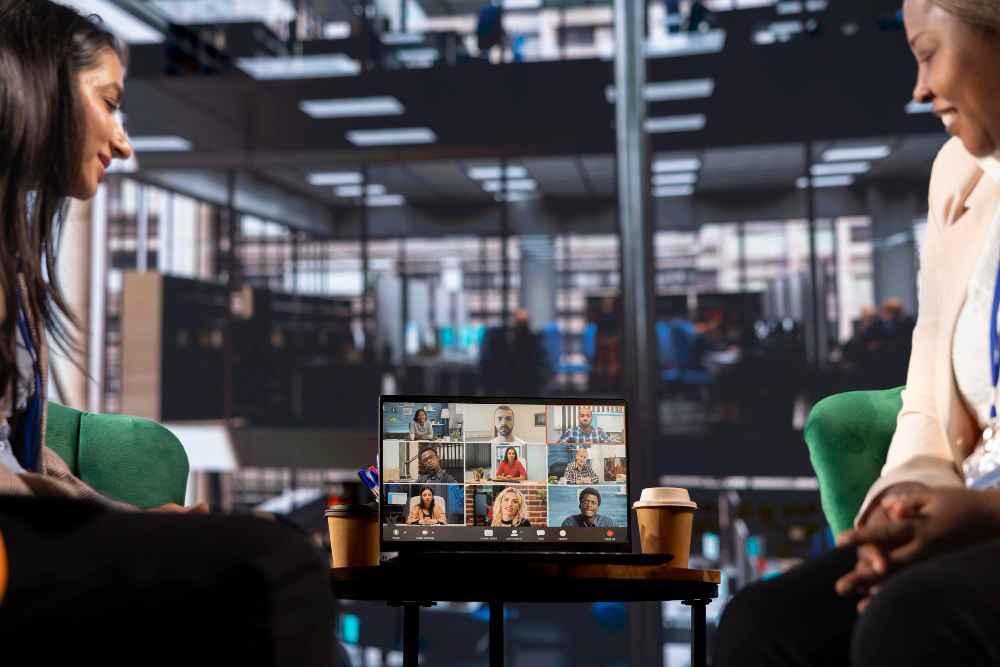
Let’s start with the real questions people are asking over coffee, not in boardrooms:
- Why are in-person events still expensive but not pulling the same turnout?
- Why do virtual events feel flat and forgettable?
- How do you reach people who want flexibility without losing energy in the room?
- And honestly… are hybrid events actually worth the effort?
Short answer: yes, when they’re done right.
Long answer: keep reading.
The Big Shift: Why Hybrid Events Took Over in the US
A few years ago, events were either fully in-person or fully virtual. Both had issues.
- In-person events were powerful but costly and limited by geography.
- Virtual events were accessible but often boring, glitchy, and easy to skip.
Hybrid events solved that problem.
Today, US brands are using hybrid events to:
- Reach local and national audiences at the same time
- Protect their budgets while expanding reach
- Give attendees choices instead of forcing one format
And here’s the key part most people miss:
Hybrid events are no longer a “backup plan.” They’re the main strategy.
What Hybrid Events Actually Mean
A hybrid event is simple:
A live, in-person event that is professionally streamed to a virtual audience.
That’s it.
But the difference between an average hybrid event and a great one comes down to execution, not platforms.
Strong hybrid events focus on:
- Experience for both audiences
- Clear audio and video
- Real engagement, not passive watching
- Professional production, not DIY setups
Why US Audiences Prefer Hybrid Events
American audiences value convenience. That’s not a trend, it’s reality.
Hybrid events work because they respect people’s time.
Here’s what attendees love:
- Join in person if it makes sense
- Watch remotely if travel is a hassle
- Rewatch sessions later
- Skip the commute without missing the message
For corporate teams, associations, and conferences, that flexibility boosts attendance without lowering quality.
Why Brands Are Choosing Hybrid Events Over Traditional Events
US brands are practical. They want results, not hype.
Hybrid events help brands:
- Increase attendance without increasing venue size
- Expand reach beyond one city or state
- Capture content for marketing, social, and sales
- Measure engagement with real data
- Justify sponsorships with higher visibility
Instead of asking “Who can travel?” brands now ask,
“Who do we want to reach?”
That mindset shift is everything.
How Smart Brands Are Doing Hybrid Events Right
Here’s where many companies slip up.
They treat hybrid events like a Zoom call with a stage.
The brands winning with hybrid events do things differently.
1. They Design for Two Audiences, Not One
This is huge.
In-person attendees and virtual viewers have different needs.
Winning brands:
- Use multiple cameras, not one wide shot
- Mix close-ups, crowd shots, and slides
- Make virtual viewers feel included, not forgotten
If the online audience feels like an afterthought, they log off.
2. They Invest in Professional Hybrid Event Production
This is where ROI actually comes from.
US brands that succeed with hybrid events:
- Hire experienced hybrid event production teams
- Use proper audio, lighting, and switching
- Avoid shaky cameras and muffled sound
Think of it this way:
You wouldn’t host a live event with a broken mic.
So why stream it that way?
3. They Keep Sessions Tight and Human
Attention spans are shorter now. Everyone knows it.
Strong hybrid events:
- Cut long speeches
- Use panels, interviews, and conversations
- Build breaks into the schedule
- Keep energy moving
It feels less like a lecture and more like a conversation. That’s intentional.
4. They Use Engagement Tools the Right Way
Polls, Q&A, and chat only work if someone is actually paying attention to them.
Winning brands:
- Assign moderators for virtual audiences
- Read online questions live on stage
- Make virtual attendees feel seen
That small effort creates real connection, not passive viewing.
5. They Repurpose the Event After It Ends
Here’s where smart US brands get extra value.
From one hybrid event, they create:
- Short social media clips
- Training content
- Sales demos
- Email campaigns
- Website videos
A single hybrid event becomes months of content.
Real-World Example: How Hybrid Events Pay Off
Picture this:
A regional conference in Atlanta plans for 300 in-person guests.
Instead of stopping there, they add a hybrid component.
Results:
- 300 attend in person
- 700 attend virtually from across the US
- Sponsors get triple the exposure
- Sessions are reused for marketing
- Attendance data improves next year’s planning
Same event. Bigger impact. Smarter execution.
That’s why hybrid events keep winning.
Common Hybrid Event Mistakes to Avoid
Even good intentions can go sideways.
Avoid these mistakes:
- Treating the virtual audience like a livestream “add-on”
- Using venue Wi-Fi without backup
- Running long, unstructured sessions
- Ignoring post-event content opportunities
- Cutting corners on production
Hybrid events amplify quality.
They also amplify mistakes.
Hybrid Events and the Future of US Events
Hybrid events aren’t replacing in-person events.
They’re evolving them.
In the US, the future looks like:
- Smaller, higher-quality in-person experiences
- Larger, more engaged virtual audiences
- Better data and analytics
- Stronger sponsor value
- More inclusive access
Brands that adapt now are already ahead.
FAQs About Hybrid Events
What industries benefit most from hybrid events?
Corporate conferences, education, healthcare, nonprofits, faith organizations, product launches, and trade shows all benefit heavily from hybrid events.
Are hybrid events more expensive than in-person events?
Not necessarily. While production costs increase, brands often save on venue size, travel, and logistics while reaching more people.
Do hybrid events still work post-pandemic?
Absolutely. Hybrid events are now about flexibility and reach, not restrictions.
How long should a hybrid event be?
Shorter sessions perform better. Many US brands break events into half-days or focused sessions instead of all-day marathons.
Do hybrid events require special platforms?
Platforms help, but production quality matters more. A well-produced hybrid event on a simple platform beats a poorly produced one on an expensive platform every time.
Final Thoughts
Hybrid events work because they meet people where they are, without lowering the bar for quality or connection. US brands that treat hybrid events as a strategic investment, not a technical checkbox, are seeing stronger engagement, wider reach, and better returns.
And that’s why Hybrid Events continue to win across the US.
Related: Hybrid Events Production That Delivers: What Audiences Expect in 2026 | How Hybrid Events Production Helps You Double Your Audience